Smart home
Water Leak Detectors: Cheap Protection Against Expensive Damage
A water leak detector is a small sensor that sits on the floor and alerts you, with a beep and a phone notification, the moment water touches its contacts. Put them under sinks, behind the washing machine and dishwasher, by the water heater and toilets, and anywhere pipes run. They cost little compared with the cost of water damage.
A slow drip under a sink can go unnoticed for weeks and rot a cabinet; a burst washing-machine hose can flood a floor in minutes. Water damage is one of the most common home insurance claims, and a leak sensor is one of the cheapest ways to catch it early.
How they work
Leak sensors have metal contacts on the underside. When water bridges them, the sensor:
- sounds a built-in buzzer (on models that have one), and
- sends a phone alert through its app, if it is connected.
The six places to put them
- Under the kitchen sink, where a loose fitting drips for months.
- Behind the washing machine, whose hoses can burst.
- Next to the dishwasher.
- Beside the water heater or boiler.
- Next to toilets, especially older ones.
- The lowest point of a basement or utility room.
Place each sensor flat, contacts down, where water would run or pool.
Wi-Fi or Zigbee?
A Wi-Fi leak sensor works on its own and is simplest for one or two locations. A Zigbee sensor needs a Zigbee gateway but usually lasts longer on batteries and suits a home with many sensors.
 Wi-Fi Leak Alarm with BuzzerSounds a local alarm and sends a phone alert; no hub needed.Watch the reel →
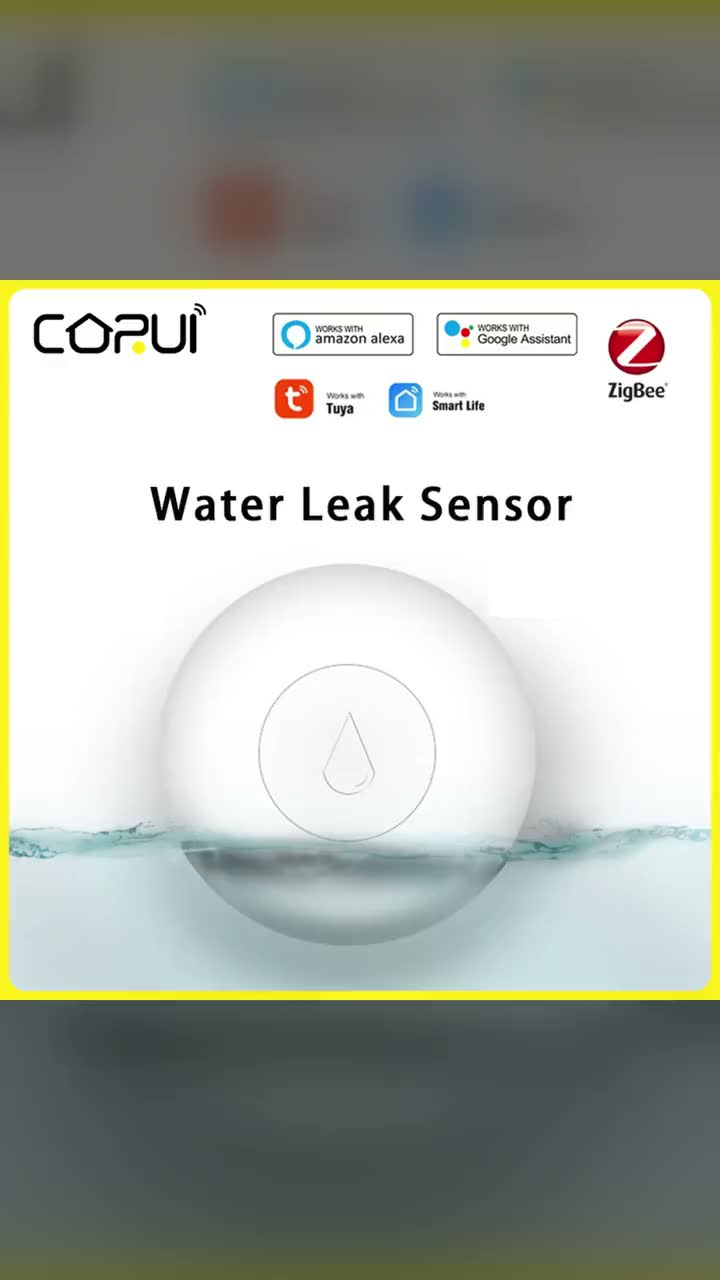 Zigbee Water SensorFor Zigbee homes; needs a Zigbee gateway to work.Watch the reel →
What to do when one goes off
- Turn off the water at the appliance or the main stop valve. Find your stop valve now, before you need it.
- Switch off electricity to the area if water is near sockets or appliances, and do not touch wet electrics.
- Mop up and dry quickly to prevent mould.
- Photograph the damage for your insurer.
- Call a plumber if the source is a pipe or fitting.
Keep them working
Test each sensor every few months by touching the contacts with a damp cloth, replace batteries when the app warns you, and keep the contacts clean.
Pair leak sensors with door and window sensors and a temperature and humidity monitor for a simple, affordable home-protection kit.
Frequently asked questions
How do water leak sensors work?
Two metal contacts on the bottom detect water: when a film of water bridges them, the sensor raises an alarm. That is why they must sit flat on the floor where water would collect.
Do leak sensors stop the water?
No, they only alert you. To shut off water automatically you need a smart shut-off valve fitted to the supply pipe, usually by a plumber.
Where is the best place for a water leak sensor?
At the lowest point near anything that holds or carries water: under sinks, behind the washing machine and dishwasher, next to the water heater, beside toilets and in basements.
Do I need Wi-Fi for a leak detector?
Models with a built-in buzzer warn you locally even without internet, but phone alerts need Wi-Fi, or a Zigbee gateway for Zigbee sensors.